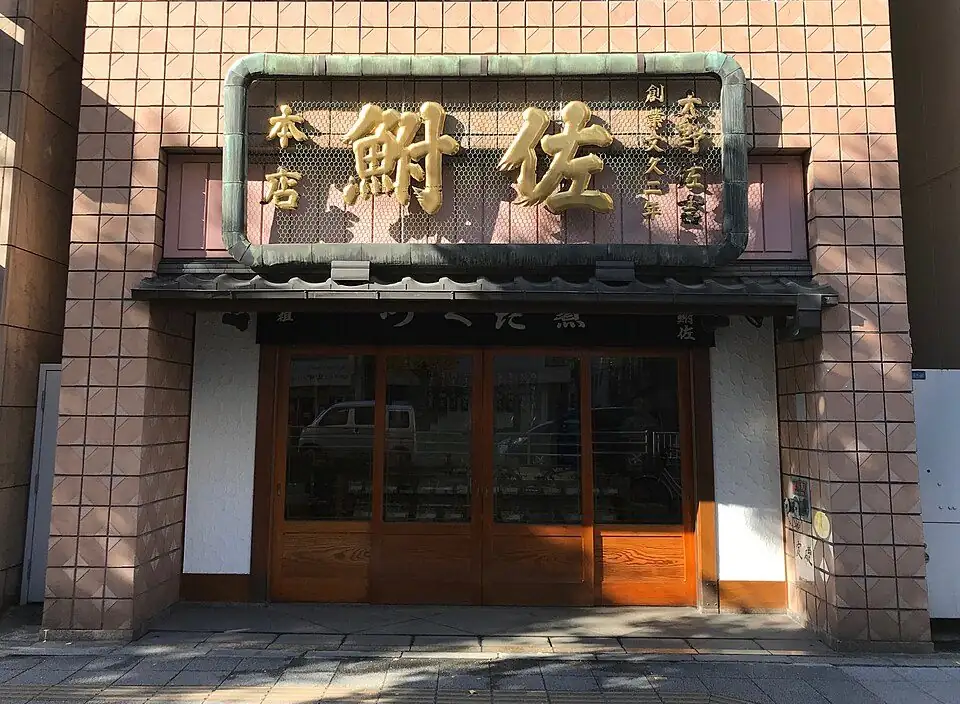
Funasa
In Japanese: 鮒佐
Est. 1862
Funasa is a tsukudani shop in Asakusabashi, Tokyo, open since 1862. Tsukudani is small fish or seaweed simmered in soy and sugar. The founder, Ono Sakichi, is credited with shaping today's tsukudani by cooking each ingredient separately in soy sauce, then a luxury, instead of the salt-boiled fish of Tsukudajima. It still cooks over wood fires and sells over the counter.
- What to try
- Tsukudani of kombuclams, shrimp, burdock and whitebait
- Address
- 2-1-9 Asakusabashi, Taito-ku, Tokyo
- Getting there
- 1-minute walk from Asakusabashi Station (Toei Asakusa Line), Exit A4; 3 minutes from Asakusabashi Station (JR Sobu Line), East Exit
- At the shop
- Take out
- Founded
- 1862
- Era
- Edo period
- Food
- Pickles & tofu
Dishes said to begin here
- Tsukudani simmered in soy sauce
Funasa began in Asakusabashi in 1862 (Edo period, 1603–1868).
More about Tsukudani simmered in soy sauce →
About Funasa
In 1862, Ono Sakichi from Shimousa Province opened a shop in Asakusa Kawaramachi, outside the Asakusa gate of Edo, now Asakusabashi. Tsukudani then meant small fish boiled with salt on Tsukudajima island. Sakichi cooked each ingredient in its own pot and used soy sauce, still a luxury at the time. This is said to be the model for today's tsukudani, and Funasa is called its originator. Each head of the house takes the name Sakichi; the current one is the fifth.123
The fire is oak wood, controlled with cast-iron burner openings in a traditional clay stove. Each ingredient simmers in an iron pot for about 30 minutes while the scum is skimmed off. The sauce has been handed down through the generations and is adjusted constantly; after anago (sea eel) is cooked, for example, the original liquid is added back to restore the flavor. There is no written recipe, and no tasting: the cooks judge by the color and sound of the bubbling sauce. The shop says the basic method of feeding wood into a stove has not changed since the Edo period.13
The five basics are kombu, clams, burdock, shrimp and whitebait, along with anago and, in season, small goby, nori and young sweetfish. Assortments come in bentwood or paper boxes, and you can buy by weight. Sales are mainly over the counter, and orders are also taken by phone.12
It is a 1-minute walk from Exit A4 of Asakusabashi Station (Toei Asakusa Line) and 3 minutes from the East Exit of Asakusabashi Station (JR Sobu Line).12
History
- 1862
Ono Sakichi opens a shop in Asakusa Kawaramachi.
At the shop
Photos2 photos
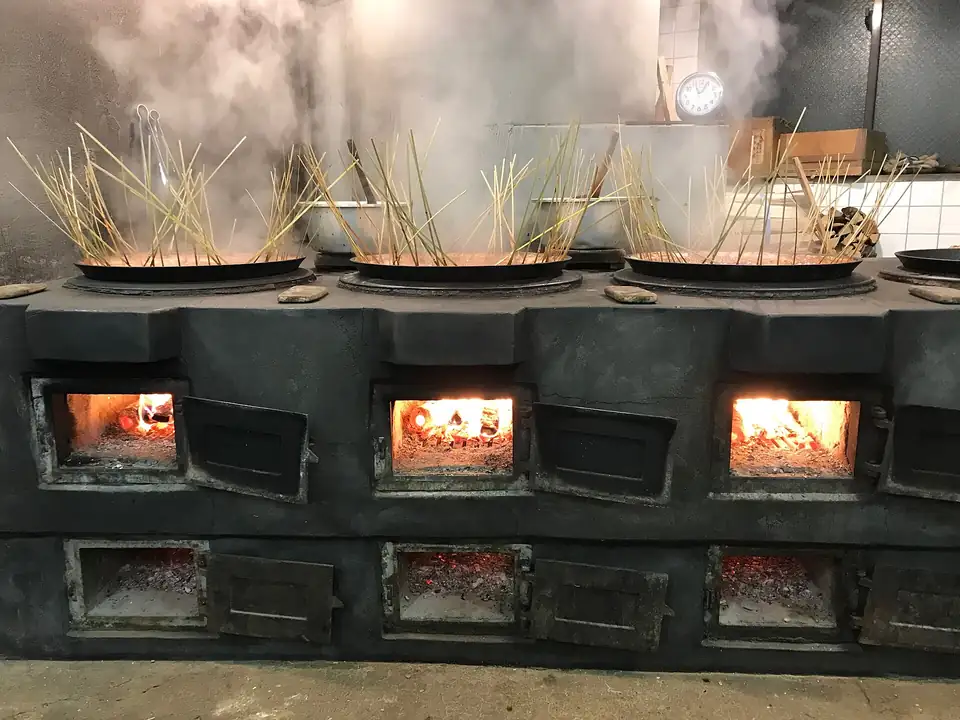
The hettsui (traditional stove) used to simmer tsukudaniPhoto: M2s1 · CC BY-SA 4.0 · Wikimedia Commons
Compiled by our editors from public sources. We warmly welcome corrections from the shop.
Nearby


Same food


When this shop first opened
1862
164 years since.
- 1853Perry's ships arrive at Uraga
- 1862Founded
- 1868The Meiji era begins
- 2026Today
Each event on the timeline is checked against a source.
See sources
1853: 外務省「六月三日ヨリ十二日迄異国船進退之図」解説; 1868: 国立公文書館「公文書にみる日本のあゆみ」年表